
Level 1 Foundation Programme · Cohort 2 · Live calls from 3 December
The nutrition side of the job. Finally written down.
Twelve modules on what food does inside the body and how that shows up in how someone performs, written by a nutritionist who has spent ten years working next to chefs in football. A live call with him every week. Whether you cook for a first team, a restaurant, a school or one client, when someone asks why that's on the menu today you've got the answer, and you know it's right.
£599 including VAT in full, or four monthly payments of £187.25. Capped at 50 chefs. Part 1 opens the day you enrol. Half of cohort 1 work in sport. The other half are restaurant, hotel, school and private chefs who want to understand this side of food, or get into sport.
- SENr approvedApproved for CPD by the Sport and Exercise Nutrition Register, the UK register for sport nutritionists.
- 40 hoursOf continuing education recognised by the American Culinary Federation.
- 2 to 5 hoursPer module, in your own time, plus the weekly live call. Calls are recorded if you miss one.
- 80% to passEvery module ends with a graded test. Pass it to move on.
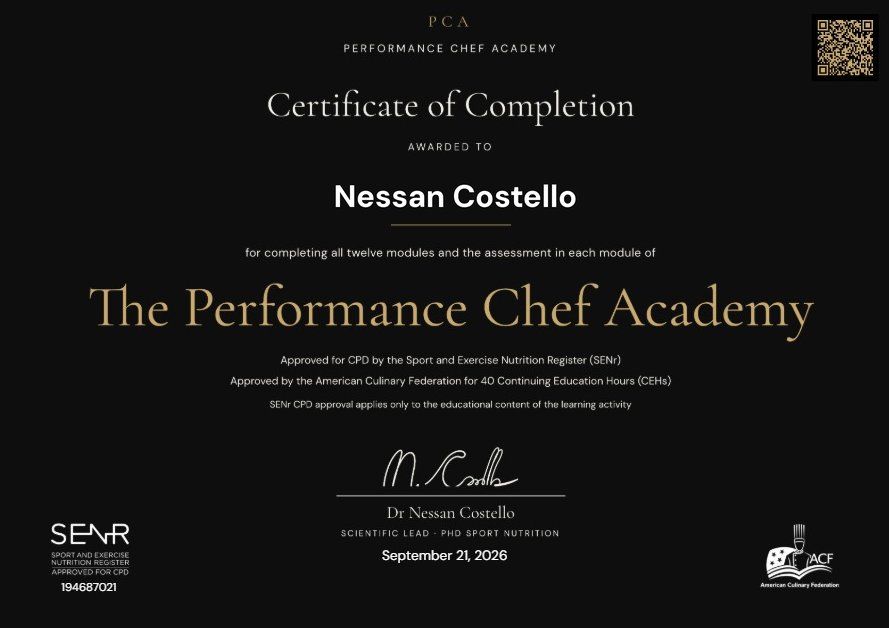
- Checkable in secondsYour certificate is issued by an independent platform, with a QR code any club can scan.
Why this exists
Nobody ever trained the chef.
The coach, the physio, the doctor and the nutritionist all trained for the job they do. The chef feeding the players didn't, because the training never existed. You learn it off whichever nutritionist is in the building, and it changes when they leave. Ness saw that for ten years from the other side of the pass. Then he went and asked the chefs.
It isn't only a sport problem. Every chef cooks for people who need to perform at something, and most of us were never taught what the food actually does once it's eaten. That part of the trade got left out of the training, wherever you cook.
"Massively different to working in normal kitchens. There's no difference between a qualification for a normal chef and for somebody that works in our industry."David McNee, 15 years cooking in football club kitchens, cohort 1
From a 2025 peer-reviewed study of chefs in professional football, co-written by Ness. Read the study
What the chefs say
Chefs on the programme now, in their own words.
From the cohort WhatsApp group, the live calls and their messages to us. Nothing here was written for a website.
On why it's written down
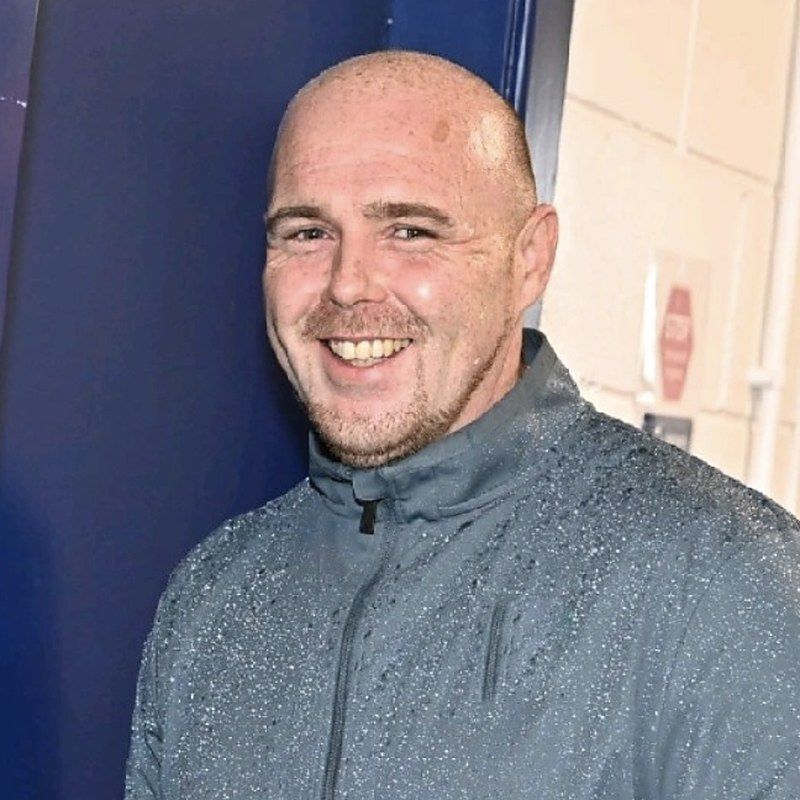
"Every time you get a new nutritionist in, they're giving you different pieces of advice. It's good to see something written down."David McNee, head chef, professional football club, cohort 1

On the live calls
"Everything is going really well so far and I'm really enjoying the course. I'm learning a lot, the group chat and Thursday session has been incredibly helpful."Stephanie Robinson, private chef, cohort 1
On doing it outside sport
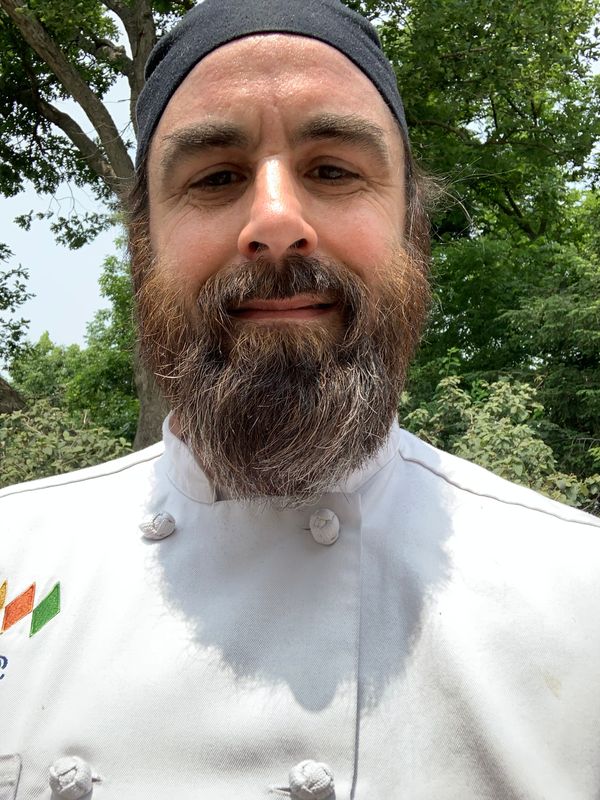
"To become a better chef, leader and learn more about the opportunities in cooking for athletes."Brian Durbin, sous chef, private country club, Missouri, cohort 1
On sitting between the team and the nutritionist
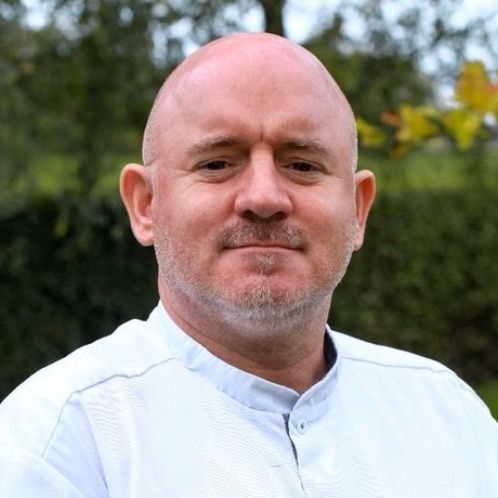
"I want to be a valuable midpoint between teams and nutritionists."Shane O'Neill, executive chef, hotel hosting travelling teams, cohort 1

On where it goes
"Watching the game from a new perspective was a revelation. The PCA programme has been a significant source of motivation and has helped me envision my future as a performance chef."Mihoko Obunai, executive chef, 25 years, cohort 1
Quotes and photos used with each chef's permission. Clubs and employers are only named where the chef has said we can.
The Performance Chef Register
Train. Get listed. Get found.
Clubs and employers have never had one place to look for chefs who understand athletes. Now they do. Every chef on the programme gets a free place on the Performance Chef Register, from the day they start, not the day they finish.
- 01Listed while you train.Your profile shows your experience, the kitchens you have run, and where you are on the programme.
- 02Employers come to us, we come to you.A club or caterer who wants to talk to you contacts PCA. We check who they are and make the introduction.
- 03You decide what is shown.Employers see your first name, your bio and your experience. Not your surname, not your current employer. Joining is optional.
The curriculum
Twelve modules. Four parts. Built around the training week.
Each part is three modules, then a rest week to catch up. Each module ends with a graded test of 20 questions, drawn from a bank of 45. You need 80% to move on. A live call with Ness every week, recorded if you miss it.
The foundations of performance cooking
Opens the day you enrol
- 01The physiology of performance cooking: how the body uses what you cook
- 02From nutrition guidelines to kitchen decisions
- 03Fuel the engine
- Rest week
Energy, delivery and fuel
Opens 3 January 2027
- 04Energy demand, energy balance, and the cost of performance
- 05Protect the system: how the gut controls fuel, comfort and performance
- 06Carbohydrate: the fuel that runs out
- Rest week
Fat, protein and fluid
Opens 3 February 2027
- 07Fat: evidence, application, and kitchen practice
- 08Protein and amino acids: building, repairing, and protecting performance
- 09Fluid and electrolytes: hydration, sweat, and performance resilience
- Rest week
Micronutrients, supplements and the individual athlete
Opens 3 March 2027
- 10Vitamins and minerals
- 11Nutrition supplements
- 12Specific populations: personalising performance nutrition
- Certificate of completion opens 10 April 2027
The programme is approved for CPD. It is not a regulated qualification and it does not make you a nutritionist. It makes you a chef who understands the nutritionist, and who the nutritionist can rely on.

Who teaches it
Taught by the nutritionist who relied on the chef.
Over a decade feeding elite footballers: Leeds Rhinos, Leeds United under Marcelo Bielsa, Newcastle United, Chelsea, where they won the Conference League and the Club World Cup. Now Head of Nutrition at Al Ahli, with back-to-back Asian Champions League titles, and a consultant to FIFA.
He published the research on the chef's role in football, then wrote the programme that was missing. He wrote every module and runs every live call.
"This is not about replacing the nutritionist. It is about completing the chain."
On completion
A certificate an employer can check in seconds.
Finish all twelve modules and pass each test and you receive the Level 1 Certificate of Completion, signed by Dr Nessan Costello, with 40 continuing education hours recognised by the American Culinary Federation. It is issued by Accredible, an independent credentialing platform, with a QR code and a live link any club can check, and it adds to LinkedIn in one click. You collect a badge at the end of each part along the way.
Before you enrol
The practical bits.
How much time does it take?
Two to five hours per module, in your own time, plus the live call each week, which runs about an hour and is recorded. Three modules a month, then a rest week.
Who is it for?
Any professional chef who wants to understand what food does inside the body and how it changes the way someone performs. Cohort 1 is about half and half: chefs from football, Australian rules, baseball, racing and college sport, alongside restaurant, hotel, country club, school and private chefs. Some want to get into sport. Some want to cook better for the people they already feed, including their own brigade. You do not need to work in sport. You do need to cook for a living.
How does the cohort work?
Cohort 2 is capped at 50 chefs. Part 1 opens the day you enrol. Live coaching starts 3 December 2026 and runs weekly. Parts 2, 3 and 4 open on 3 January, 3 February and 3 March 2027, with a rest week after each part. The certificate opens 10 April 2027.
What does it cost?
£599 including VAT paid in full, or four monthly payments of £187.25 (£749 in total). Clubs and employers putting a team through can email hello@performancechefacademy.com for a VAT invoice.
What if it is not for me?
A full refund within 14 days of purchase, as long as you have not attended a live call or completed Module 1. Email hello@performancechefacademy.com.
Will this make me a nutritionist?
No, and it isn't meant to. The nutritionist sets the plan. The chef makes it happen on the plate. This programme teaches the part of their world you need, so the chain is complete.
Cohort 2
- 12 modules in 4 parts, with a rest week after each
- Live coaching with Ness every week from 3 December
- Private cohort group, capped at 50 chefs
- Timed service scenarios in every module
- Certificate of Completion and 4 badges via Accredible
- 40 ACF continuing education hours
- A free place on the Performance Chef Register
- 14-day refund if you have not passed Module 1
Part 1 opens as soon as you enrol. Questions: nessan@performancechefacademy.com
Not ready yet?
Get Fuel for Thought every Monday.
A free five-minute email from Ness. One idea about food and performance, one question, one thing to try in your kitchen that week. Plus the first word on new cohorts and roles in sport. No pitch in the body, one line at the end.
Free, weekly, from Ness
Join the chefs who read it.
Your information is protected and we never spam. Unsubscribe in one click, any time.
Putting a team through?
Places for clubs, caterers and colleges, invoiced with VAT. Employers can ask for a progress update on their chefs at any point.
hello@performancechefacademy.com